Photographer · Publisher · Curator · Collector · Philanthropist
Hossein
Farmani
Fifty years in photography — and a life spent building homes for the people who make it.
Founder of the Lucie Awards and the International Photography Awards, gallerist, festival-maker and one of America’s notable private collectors of photography. From a small magazine in 1980s Los Angeles to galleries and festivals on three continents, his work has had one constant: put great images in front of people, and honor the photographers while they can still hear the applause.
1975
Begins working as a photographer — the start of fifty years in the medium.
2003
The Lucie Awards and International Photography Awards are founded.
200+
International exhibitions curated across North America, Europe and Asia.
30,000
Photographs, vintage and contemporary, in his personal collection.
01 — The story
A life shaped by photographs
Hossein Farmani came to the United States from Iran at a young age, without his family and with little to his name. “I came from a very poor family,” he has said, “and since I was very young, photography has always inspired me.” That fascination became his first profession: from 1975 to 1978 he worked as a photographer, and by 1980 he was already teaching classes and giving talks on how to look at — and how to collect — photographs, years before the medium had a settled place in the art market.
Over the decades that followed he became a rare figure who moves easily between worlds: publisher and pre-press printer, internet entrepreneur, gallerist, curator, collector and fundraiser. The thread connecting them is a conviction he still repeats today — that the photographers whose images change how we see the world deserve recognition in their lifetime, and that a new generation deserves the chance to become the next masters.

02 — Publishing & the early web
From VUE to the dial-up era
Farmani’s first venture was VUE, a fashion and culture magazine launched in Los Angeles in 1985 and distributed internationally. It was followed in 1986 by FotoFolio, devoted to photography, and in 1989 by Fontographics, a pre-press studio founded just as desktop publishing was transforming how magazines were made. Farmani–Yamanouchi followed in 1992, and through the decade he worked as a creative consultant to titles including Venice Magazine and Latin Style.
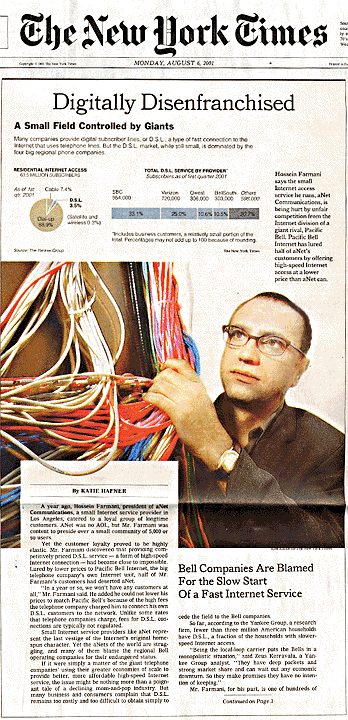
In the mid-1990s he turned to the internet. As president of aNet Communications, an independent internet service provider, he staged one of the first online art auctions in March 1995 — and on 6 August 2001 he appeared on the front of The New York Times business section in “Digitally Disenfranchised,” a story about small providers squeezed by the telephone giants. Publishing remains part of the work today through D5 magazine and Luminaries, a journal of photography, design and architecture.
- VUE Magazine — founder, 1985
- FotoFolio — founder, 1986
- Fontographics — pre-press studio, 1989
- Farmani–Yamanouchi — 1992
- aNet Communications — internet provider, 1995
- D5 and Luminaries — publisher
03 — Awards
Honoring the masters while they are still here
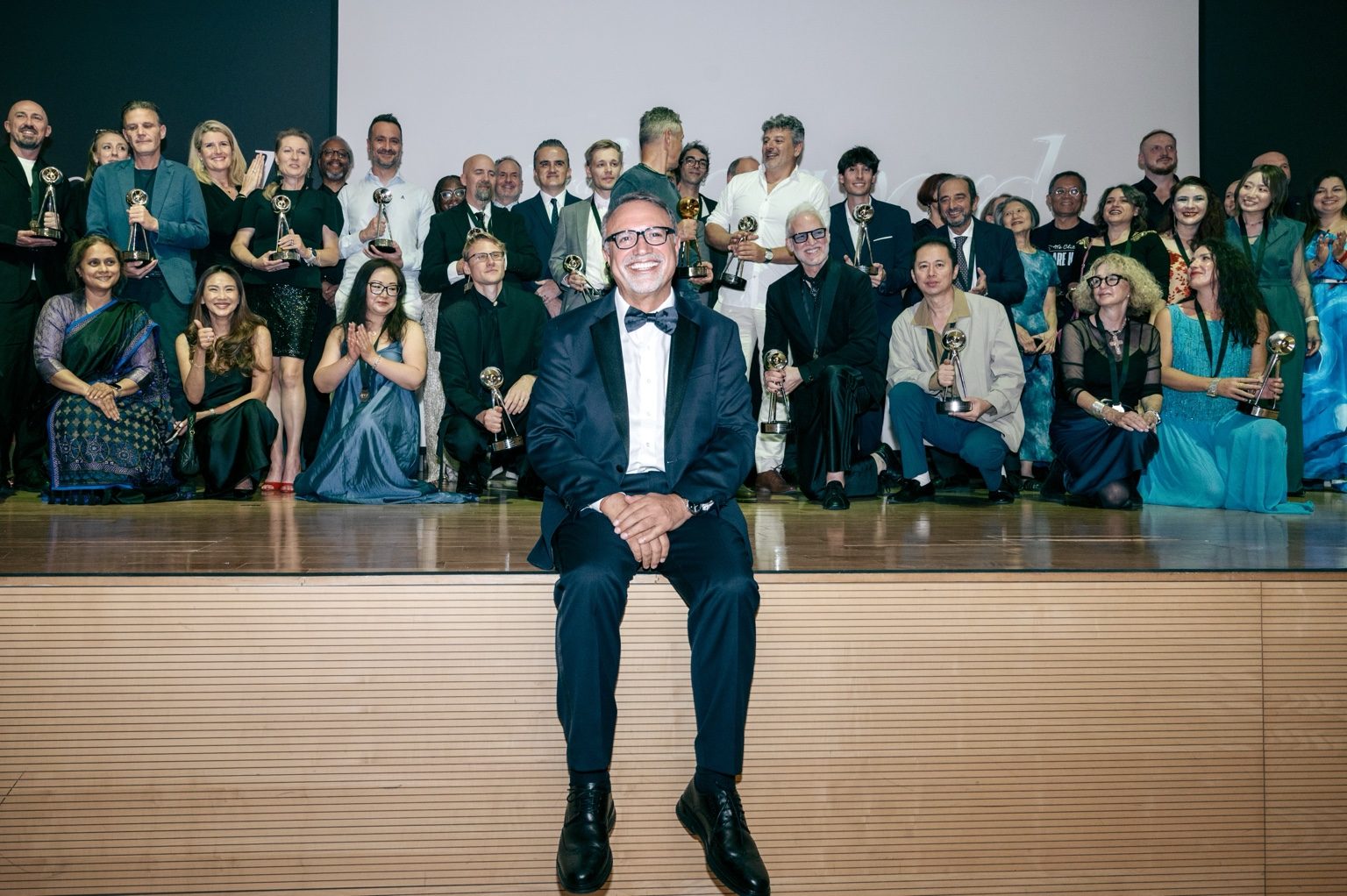
In 2003 Farmani founded the Lucie Awards to honor the greatest living photographers. The first ceremony, held in Los Angeles, gave its Lifetime Achievement award to Henri Cartier-Bresson, and early honorees included Gordon Parks, Sebastião Salgado, Annie Leibovitz and Steve McCurry. The Lucies moved to New York, to Lincoln Center and Carnegie Hall, and in 2025 the ceremony travelled to Ostuni in southern Italy. They are presented by the Lucie Foundation, the nonprofit he established in 2002, which also runs scholarships and educational programs for emerging photographers.
The same year he launched the International Photography Awards, an open competition for professionals and amateurs whose top titles — International Photographer of the Year and Discovery of the Year — are presented on the Lucie stage. IPA grew into a family of competitions run through Farmani Group, with sister awards in Paris (Prix de la Photographie Paris), Moscow, Tokyo and Budapest, and reached beyond photography with the International Design Awards, the London International Creative Competition, the European Product Design Award, the Architecture MasterPrize and DNA Paris Design Awards.
I wanted to unite the world of photography and bring much-deserved respect and recognition to the world of photography.
Hossein Farmani
04 — Galleries
Rooms where photographs can be seen
Farmani Gallery, with spaces in Los Angeles and New York, was where he first put that conviction into practice, and he has since curated more than 200 exhibitions internationally. In 2012 he moved to Bangkok, where for three years he ran the Rooftop Gallery and served as an art envoy for the United States Embassy, curating two travelling exhibitions and lecturing at more than twenty universities and schools in Thailand, the Philippines and China.
That work grew into House of Lucie, a network of free-to-visit spaces for contemporary photography, funded in part by entries to the Farmani Group competitions. The first opened in Bangkok in 2016, with another near Manila in 2017. In 2019 Farmani returned to Iran to open two photography centers in restored Persian courtyard houses in Kashan, one of them devoted to the work of Steve McCurry. Today House of Lucie has homes in Budapest, Athens, Ostuni and Koh Samui.
05 — Festivals
Photography in the streets and squares
Festivals bring photography to people who might never walk into a gallery, and Farmani has helped build them on three continents. In the United States he co-founded the Palm Springs Photo Festival, SNAP! Orlando and Month of Photography Los Angeles. In Turkey he initiated the original Istanbul Photo Festival and organized its first two editions, before it was later relaunched independently by others; in Myanmar he supported the Yangon Photo Festival as a funding partner.
His most personal festival is OFF — Ostuni Foto Festival, which he founded in the whitewashed hill town of Ostuni in Puglia. Its exhibitions fill historic buildings, courtyards and public spaces, alongside talks and encounters with photographers, and the town has become a second home for the Lucie Foundation, with its own House of Lucie gallery on Corso Garibaldi.
- OFF — Ostuni Foto Festival, Italy · Founder
- Palm Springs Photo Festival, USA · Co-founder
- SNAP! Orlando, USA · Co-founder
- Month of Photography Los Angeles · Co-founder
- Istanbul Photo Festival (original) · Initiator, first two editions
- Yangon Photo Festival, Myanmar · Funding partner
06 — The collection
Thirty thousand photographs
Alongside building institutions, Farmani has spent more than four decades collecting. His holdings — some 30,000 photographs, vintage and contemporary, gathered from around the world — concentrate on the masters of the medium and are complemented by several hundred paintings. A curator at the J. Paul Getty Museum once described it as “one of the most important private collections of photography in America.”
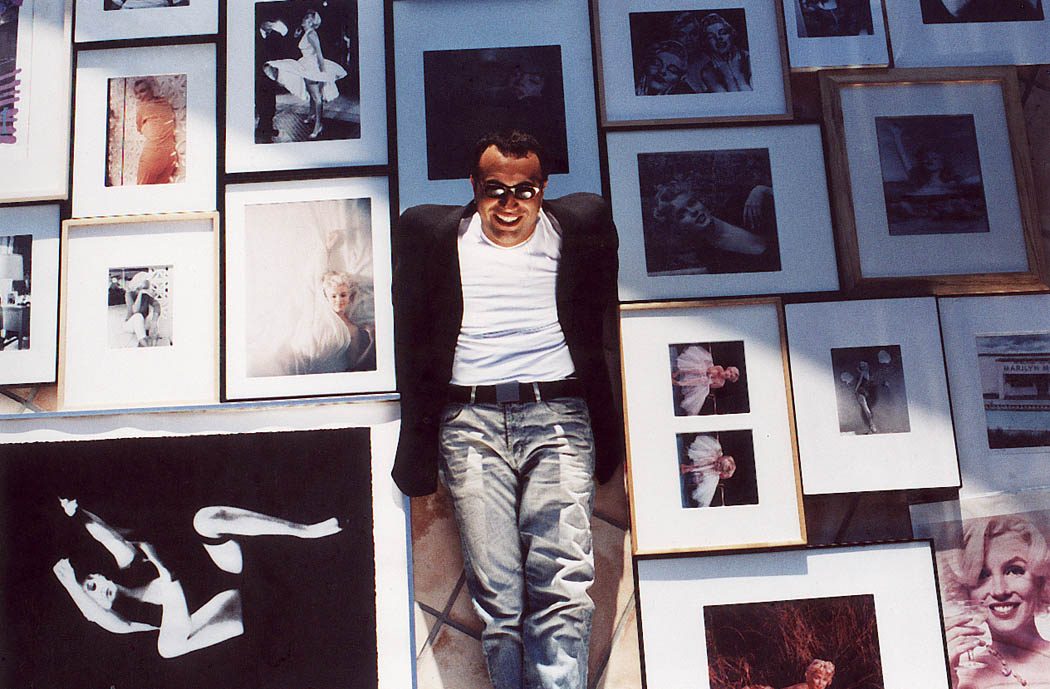
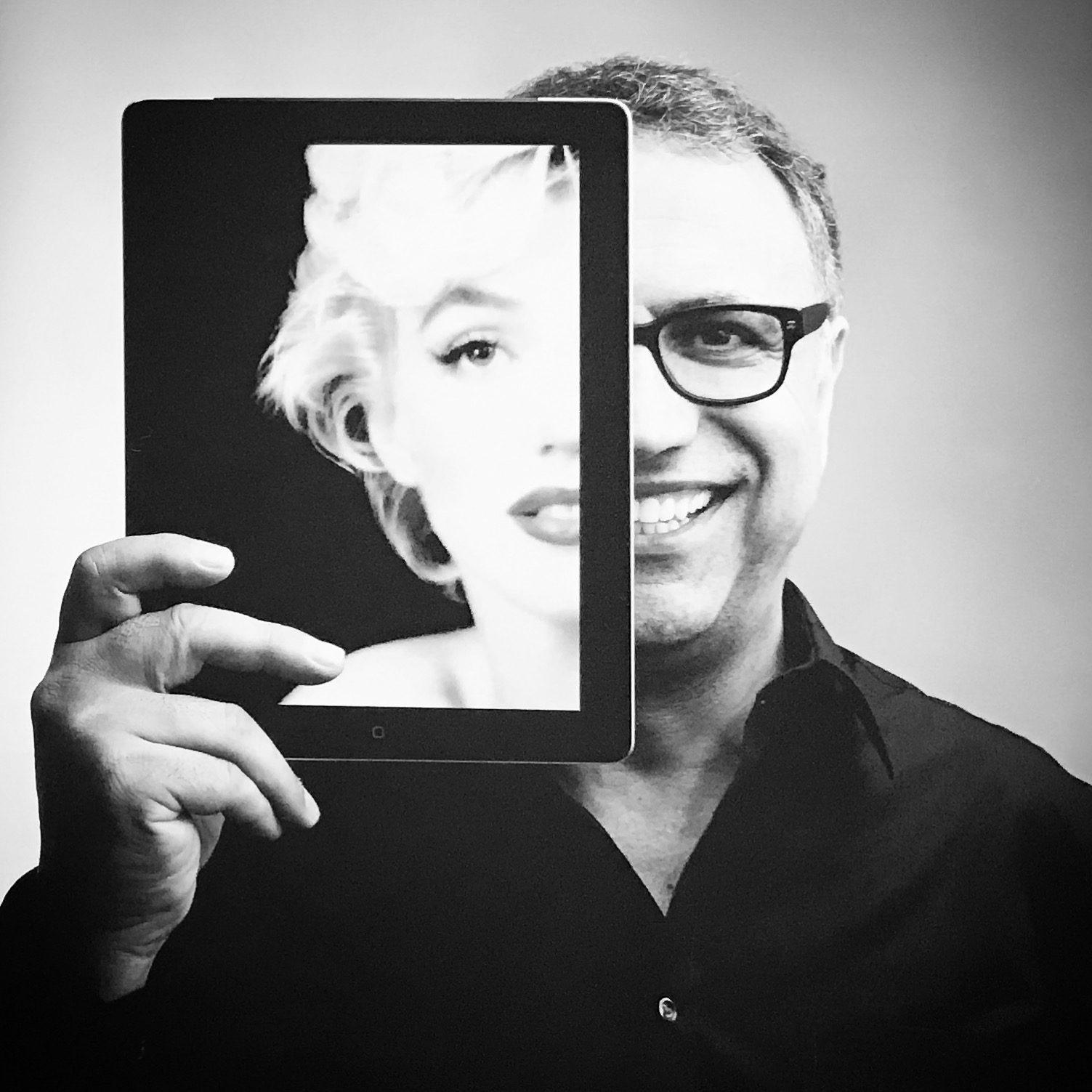
Within it is a celebrated group of photographs of Marilyn Monroe, which brought the collection wider attention in the press, including a feature in Cartier’s magazine The Collectors, as well as the Los Angeles Times and Venice Magazine. For Farmani collecting has never been only private: since his first classes in 1980 he has urged others to “collect and support photography,” and he still lectures on how to enter the fine-art photography market.
07 — Giving back
Art as a way to help
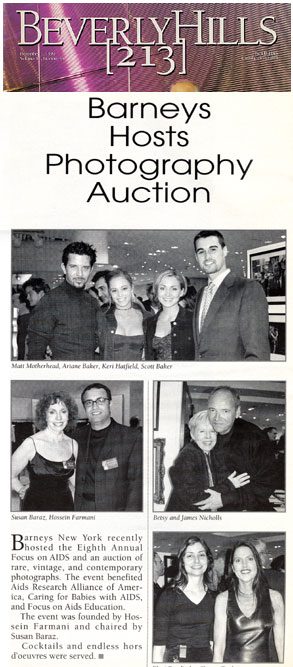
In 1987 Farmani co-founded Focus on AIDS with Susan Baraz and a small circle of friends — an all-volunteer organization, and today one of the oldest AIDS charities in the United States, that turns the generosity of photographers and collectors into funds for research and care through its benefit photography auctions. After the attacks of September 11, 2001 he organized Art for New York, a benefit auction of art and photography held with Stephen Cohen Gallery at Butterfields in Los Angeles on October 28, 2001, raising money through Mercy Corps for children affected by the attacks.
His giving has followed the same instinct beyond the art world: support for the Children Arts Museum, funding for Asha Kirana Hospital in Mysore, India, and years spent teaching photography in orphanages and underserved neighborhoods — presenting the camera both as a means of expression and as a practical skill that can lead to work. Through the Lucie Foundation, scholarships carry that commitment forward to emerging photographers.
08 — Teaching
The IPA was created to nurture young photographers to be the next masters.
Hossein Farmani
For more than twenty years Farmani has lectured at universities and colleges, in over twenty-five cities, on photography and on the social and environmental questions it can raise. He has spoken at TEDx Chiang Mai and TEDx Bologna and served on juries for Rencontres d’Arles, Photolucida and Photofest, among others.
His advice to young photographers rarely changes — “most important is to develop your own style” — and his ambitions keep turning toward places where photography is underserved, Africa above all, with the aim of building community centers where the next generation can learn, exhibit and be seen.
09 — Timeline
Five decades, briefly
A short chronology of the ventures, institutions and initiatives described above, drawn from published sources and Farmani’s own archive.
| 1975 | Begins working as a photographer, a career he pursues until 1978. |
| 1980 | Begins teaching classes and lectures on photography appreciation and collecting. |
| 1985 | Launches VUE magazine in Los Angeles. |
| 1986 | Starts FotoFolio, a photography publication. |
| 1987 | Co-founds Focus on AIDS. |
| 1989 | Founds Fontographics, a pre-press studio. |
| 1992 | Establishes Farmani–Yamanouchi. |
| 1995 | Stages one of the first online art auctions through aNet Communications. |
| 2001 | Featured on the cover of The New York Times business section; organizes Art for New York after September 11. |
| 2002 | Establishes the Lucie Foundation. |
| 2003 | Founds the Lucie Awards and the International Photography Awards. |
| 2012 | Moves to Bangkok and runs the Rooftop Gallery for three years. |
| 2015 | Launches the Lucie Technical Awards, honoring the people behind photographic technology. |
| 2016 | The first House of Lucie opens in Bangkok. |
| 2019 | Opens two photography centers in historic courtyard houses in Kashan, Iran. |
| 2025 | The Lucie Awards are held in Ostuni, Italy, home of OFF — Ostuni Foto Festival. |
10 — Press
In print
Farmani’s ventures, causes and collection have been covered by The New York Times, the Los Angeles Times, The Art Newspaper, Cartier’s The Collectors, Venice Magazine and Beverly Hills [213], among others — a record that runs from the early commercial internet to the opening of new photography centers in Iran.
- The New York Times — “Digitally Disenfranchised,” business section cover, 6 August 2001
- Cartier, The Collectors — feature on the Marilyn Monroe photographs
- The Art Newspaper — “Hossein Farmani’s homecoming sees two photography centres open in Iran,” June 2019
- Beverly Hills [213] — “Barneys Hosts Photography Auction,” Focus on AIDS benefit
- Los Angeles Times — coverage of Focus on AIDS
11 — Archive
From the archive
Much of this story was first told online, on websites Farmani built from the mid-1990s onward. The original farmani.com, the early Farmani Group pages and artforny.org — the site created for the Art for New York benefit in 2001 — are preserved here as they were published, with their photographs, press clippings and the complete online auction catalogue, lot by lot.
The printed catalogues of two benefit auctions are kept here too and can be read in the browser or downloaded: Art for New York, held at Butterfields in Los Angeles in October 2001, and Focus on AIDS, whose photography auctions have raised funds for AIDS research and care since the late 1980s. Together they record the photographers, artists and collectors who gave work to both causes.
12 — Contact
Get in touch
For press, exhibitions, collaborations and speaking invitations, please write. Current projects can also be followed through the organizations Farmani founded.